Our verdict on CelluCare
What we liked
- The full ingredient list is printed on the label image on the sales page
- Vitamin and mineral amounts are disclosed: C, D3, magnesium and chromium
- One capsule a day, one-time payment, no subscription
- 60-day refund window and free US shipping on 3 and 6 bottles
Watch out for
- A 528 mg proprietary blend hides all 13 herbal amounts, including berberine
- The sales page shows 8 ingredients; berberine, bitter melon and guggul appear only on the label
- Several blend herbs may lower blood sugar, so lows are possible with diabetes medicines
- Refunds need an RMA, you pay return postage, and shipping is not refunded
- No single-bottle option; the cheapest order is $158 plus shipping
- An unnamed "Leading Doctor" and an unsourced "4.98/5 based on 2000+ reviews"
TonicNest may earn a commission if you buy through links on this page, at no extra cost to you. That does not change what we report.
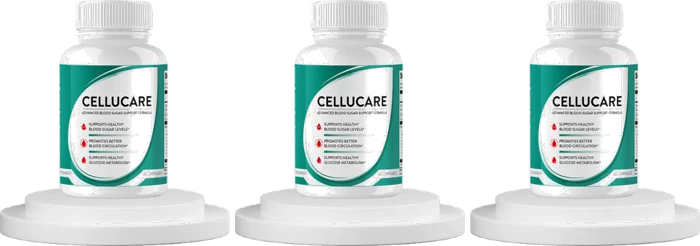
CelluCare is a once-a-day capsule sold as a blood sugar support formula, and its label holds a 528 mg proprietary blend of 13 botanicals with no single amount disclosed[1]. Split evenly, that is about 41 mg per herb, so a buyer cannot tell how much berberine sits in each capsule.
Several herbs in the blend are studied for lowering blood sugar[8]. That matters most to anyone already taking diabetes medicine, who should talk to a doctor before the first capsule. Our checking method explains how we read labels and sources.
What is CelluCare and what does the vendor claim?
Each bottle holds 30 capsules and the label serving is 1 capsule, so one bottle lasts 30 days. The vendor FAQ says to take it with the evening meal and half a glass of water[3].
BuyGoods is the retailer and handles order support. The same vendor also sells the product through a ClickBank order page at the same prices[1]. The label names cellucarehq.com in Aurora, Colorado, as the distributor, with phone +1-833-201-0147.
The sales page shows a "4.98/5 based on 2000+ reviews" rating but names no review platform, so we could not trace it to any source.
CelluCare facts at a glance
CelluCare is a 30-capsule bottle of vitamins, minerals and a 528 mg herbal blend, sold by BuyGoods for $158 to $294 per order (checked October 27, 2026), with a 60-day refund window. The table below sums up the label, the price and the terms, with a source on every row.
| Item | What we found |
|---|---|
| What it is | Blood sugar support dietary supplement, per the vendor[1] |
| Form and serving | Capsules, 30 per bottle, 1 capsule daily[1] |
| Ingredients disclosed? | All 17 label lines named; 4 nutrient amounts shown; the 13 blend herbs share 528 mg with no amounts[1] |
| Price, checked October 27, 2026 | $158 for 2 bottles plus shipping, up to $294 for 6 bottles[1] |
| Refund window | 60 days from purchase, RMA by email required[2] |
| Seller | BuyGoods (retailer); also a ClickBank order page from the same vendor[1] |
| Amazon and Walmart | Not checked by us; the vendor tells buyers to order only from its own site[1] |
Who might consider CelluCare, and who should not?
CelluCare may suit a healthy adult who wants an herbal blood sugar formula, has cleared it with a doctor and accepts that the herb doses are unknown. It is a poor fit for anyone on diabetes medicine without medical advice, and the label rules out people under 18 and those who are pregnant or nursing[1].
Skip it, or ask a doctor first, if any of these apply:
- You take insulin or another blood sugar medicine (risk of lows from several blend herbs)
- You have liver disease (cassia cinnamon contains coumarin)[16]
- You have G6PD deficiency (a bitter melon caution)[14]
- You take digoxin, blood pressure drugs or blood thinners
A supplement is no substitute for a fasting glucose or A1C test. If you suspect high blood sugar, get tested by a clinician before buying anything.
How does CelluCare claim to work?
The vendor says CelluCare "helps naturally awaken the feedback loop responsible for the blood sugar and healing and regenerative potential that's lying dormant within you"[1]. That is a marketing claim. The sales page names no study of the CelluCare capsule that tests it.
What is known comes from separate studies of single ingredients, often at doses far above what a 528 mg blend of 13 herbs can hold. Berberine, gymnema and banaba have human glucose data[8][10][12]. Bitter melon does not hold up in meta-analyses[13].
The sales page lists 21 "Scientific References." Some cover PM2.5 air pollution, Alzheimer disease and blood pressure after cardiac arrest. A disclaimer says the company is not endorsed by or affiliated with the groups whose logos appear beside them.
We lay out each step of the evidence in does CelluCare work.
What ingredients are in CelluCare?
CelluCare contains vitamin C 90 mg, vitamin D3 25 mcg (1,000 IU), magnesium 20 mg, chromium 100 mcg and a 528 mg blend of turmeric, cocoa, berberine, gymnema, cassia cinnamon, olive leaf, eleuthero, juniper, pine bark, bitter melon, banaba, butcher's broom and guggul[1]. Only the 4 nutrient amounts are printed.
The sales page shows 8 ingredient tiles and says "Over 12" ingredients. Berberine, cinnamon, olive leaf, bitter melon, guggul and all 4 nutrients appear only on the label.
| Ingredient | Dose disclosed? | What the evidence says | Grade |
|---|---|---|---|
| Berberine HCL | No | Lowers blood glucose in type 2 diabetes trials; many reviews are low quality[8] | Moderate |
| Gymnema leaf | No | Lower fasting glucose and HbA1c in small trials, 200 to 1,000 mg a day[10] | Limited |
| Banaba leaf | No | 12-week trial in 24 adults used 500 mg twice daily[12] | Limited |
| Cassia cinnamon | No | Body fat effects only at 2 g a day or more[15] | Weak at blend dose |
| Bitter melon | No | Two meta-analyses found no glucose or HbA1c effect[13] | Weak |
| Olive leaf | No | Blood pressure and lipid gains; glucose evidence low quality[17] | Weak for glucose |
| Cocoa bean extract | No | Fasting glucose down 4.91 mg/dL at food-level doses[21] | Weak at blend dose |
| Turmeric | No | No blood sugar trial in our files; liver caution for high-absorption forms[20] | Weak |
| Eleuthero, juniper, pine bark, butcher's broom | No | No human blood sugar trial found; juniper data are animal only[23][24] | Weak |
| Guggul | No | Dose unknown; our evidence check is still in progress | Not graded yet |
| Chromium 100 mcg | Yes | Glucose results mixed; trials used 200 to 1,000 mcg[19] | Weak |
| Vitamin C, D3, magnesium | Yes | Standard nutrient amounts; no blood sugar evidence in our files | Weak |
Each herb gets its own entry in our CelluCare ingredients list. For berberine on its own, see our berberine benefits and side effects guide.
Does CelluCare work for blood sugar support?
No trial of the finished CelluCare capsule appears on the sales page or in our evidence files, so nobody can say it works as sold. Some of its herbs lower glucose in their own trials, but the label hides how much of each one you get.
Here is the evidence, from weakest link to strongest:
- Plausibility. Berberine, gymnema and banaba have human glucose data. An overview of 54 systematic reviews found berberine lowers blood glucose in type 2 diabetes trials[8].
- Ingredient trials. Gymnema meta-analyses report lower fasting glucose and HbA1c in small trials[10]. A banaba trial in 24 adults with metabolic syndrome used 1,000 mg a day for 12 weeks[12]. That is nearly twice the whole 528 mg blend.
- Null results. Two bitter melon meta-analyses found no change in glucose or HbA1c[13].
- Finished-product trial. None found. The vendor's testimonials, such as "My readings are consistently in the normal range now," carry no dates and cannot be checked.
The vendor says "Most people start feeling a difference after the first week." We found no data behind that line. Blood sugar is measured with a meter or lab test, never by feel, so track numbers with your doctor if you try it.
CelluCare side effects: who should ask a doctor first?
Anyone on diabetes medicine, blood thinners, blood pressure drugs or digoxin, and anyone with liver disease, should ask a doctor before taking CelluCare. The label itself says to consult a physician if you take medicine or have a medical condition[1].
- Berberine: mild stomach upset; NCCIH says it can harm newborns and is not for pregnancy or breastfeeding[9]
- Bitter melon: stomach problems, rare case reports of heart rhythm trouble; add-on effect with insulin[14]
- Gymnema: rare liver injury reports[11]
- Cassia cinnamon: coumarin, a concern with liver disease[16]
- Eleuthero: a case report of raised digoxin levels[22]
- Olive leaf: possible added effect with blood pressure and diabetes drugs[18]
- Butcher's broom: theoretical clash with alpha-blockers[25]
See a doctor right away if you notice:
- Shakiness, sweating, confusion or a racing heart (possible low blood sugar)
- Yellow skin or eyes, dark urine or upper belly pain
- An irregular heartbeat or fainting
More detail is in CelluCare side effects.
What do CelluCare complaints and buyer reports show?
We found no public complaint record for CelluCare in the sources we could open, and two major sources stay NOT checked. The Better Business Bureau has no CelluCare profile (0 search results)[5]. Trustpilot blocked our access and had no archived copy, so Trustpilot is NOT checked.
The FDA recall database returned no CelluCare records[6], and the FDA adverse event database (CAERS) had no reports naming it[7]. FDA warning letters and FTC actions are NOT checked.
The vendor says "we have not received a single complaint yet." Its 3 testimonials, from Michael S., John M. and Emily R., are marked "Verified Purchase" but carry no dates. We track new reports on CelluCare complaints, and the order terms matter as much as the label, so read the refund steps before buying.
How much does CelluCare cost?
CelluCare costs $158 for 2 bottles plus shipping, $207 for 3 bottles and $294 for 6 bottles, checked October 27, 2026[1]. There is no single-bottle option. The cost per day runs from $1.63 on the 6-bottle order to $2.80 on the 2-bottle order with shipping.
| Package | Per bottle | Total | US shipping | Checked |
|---|---|---|---|---|
| 2 bottles (60 days) | $79 | $158 ($167.95 at the ClickBank checkout) | $9.95 | October 27, 2026 |
| 3 bottles (90 days) | $69 | $207 | Free | October 27, 2026 |
| 6 bottles (180 days) | $49 | $294 | Free | October 27, 2026 |
The 3- and 6-bottle orders add two e-books. Checkout offers optional $6.95 shipping insurance, and upsell pages follow the order: decline anything you did not plan to buy. The vendor FAQ describes a one-time payment with no subscription. On the ClickBank route, the card statement reads CLKBANK*CelluCare. We could not read BuyGoods checkout totals, which load by script.
Coupon and sale checks are in CelluCare price and coupon.
What is the CelluCare refund policy?
CelluCare has a 60-day refund window from purchase, but you must email support for an RMA number first, approved within those 60 days[2]. You then ship the product back within 14 days at your own cost, in good physical condition, to 19655 E 35th Dr #100, Aurora, CO 80011.
Shipping and handling are not refunded. BuyGoods processes orders and handles support.
The vendor pages disagree. The sales page promises a "no-questions-asked refund" within 48 hours of the return arriving. The return policy says the vendor will notify you of "approval or rejection of your refund" and credits it "within a certain amount of days." Keep your RMA email and tracking number.
Where can you buy CelluCare?
CelluCare is sold on the vendor's site, getcellucare.com, through BuyGoods, with a ClickBank order page at the same prices[1]. We did not check Amazon or Walmart listings, so we cannot say whether real stock is sold there.
Copycat pages online show a fake government approval badge and invented review counts. Whatever you buy, compare the Supplement Facts on the bottle you receive with the label on the vendor page: 528 mg blend, 13 herbs, chromium 100 mcg. Our CelluCare on Amazon and Walmart page covers marketplace risks.
Is CelluCare legit?
CelluCare is a real product sold through BuyGoods, a known retail platform, with a 60-day refund policy and a US phone line. Some facts call for care. The vendor domain and the distributor domain on the label were both registered on June 5, 2024.
The terms and privacy pages name no company or operator address[4]. The label lists 9655 E 35th Dr while the return policy uses 19655 E 35th Dr, a fulfilment address. A "Made in a FDA Registered Facility" badge names no facility, and registration is not FDA approval of a product. See is CelluCare legit for the seller checks.
CelluCare vs other approaches to blood sugar support
A doctor-guided plan with testing is the only option here built to measure and adjust blood sugar. CelluCare offers convenience but hides its doses, while a single-ingredient product at least shows what you take. The table compares them.
| Approach | Strength | Limitation |
|---|---|---|
| CelluCare | One capsule a day, 13 herbs plus 4 nutrients | Herb doses hidden; no finished-product trial |
| Single-ingredient berberine | Glucose lowering seen in type 2 diabetes trials[8] | Low-quality reviews; not for pregnancy[9] |
| Cassia cinnamon at gram doses | Body fat effects at 2 g a day or more[15] | Coumarin; liver caution[16] |
| Doctor-guided care | Lab tests, prescribed medicine and diet advice, adjusted over time | Needs visits and follow-up |
Our berberine guide covers the single-ingredient route in depth.
How do you take CelluCare?
The label serving is 1 capsule a day, and the vendor FAQ says to take it with the evening meal and half a glass of water[3]. One bottle covers 30 days. The label warns against use under 18 or while pregnant or nursing. If you check your blood sugar at home, log readings before you start so you and your doctor can compare. Timing tips are in how to take CelluCare.
CelluCare: final take
CelluCare may suit a healthy adult who wants a one-capsule herbal formula, has a doctor's go-ahead and can live with unknown herb doses. Its label is complete, its nutrient amounts are shown and the order is a one-time payment.
Skip it if you take diabetes medicine without medical supervision, are pregnant or nursing, have liver disease, or want to know exactly how much berberine you are getting. The refund also costs you return postage and the original shipping fee. If you decide to try it, start with the order size you can afford to lose, and keep testing your blood sugar the usual way.
Frequently asked questions
What is CelluCare used for?
The vendor sells CelluCare as a blood sugar support formula and says it is designed to help maintain healthy blood sugar and support weight management. It is a dietary supplement, not a diabetes medicine, and no trial of the finished capsule appears on the sales page.
How much berberine is in CelluCare?
The label does not say. Berberine HCL sits inside a 528 mg proprietary blend of 13 herbs with no individual amounts, which averages about 41 mg per herb if split evenly. The true berberine amount could be higher or lower, and buyers cannot check it.
Can I take CelluCare with metformin or insulin?
Ask your doctor first. Berberine, gymnema, banaba and bitter melon can lower blood sugar, so stacking them with metformin, insulin or other diabetes drugs may raise the risk of lows. The label also tells anyone on medication to consult a physician.
Is CelluCare safe during pregnancy?
No. The label says it is not for pregnant or nursing women. NCCIH says berberine can harm newborns and should be avoided in pregnancy and breastfeeding, and Memorial Sloan Kettering advises against bitter melon in pregnancy because of animal developmental findings.
Does CelluCare have a subscription?
No. The vendor FAQ describes a one-time payment with no subscription, checked October 27, 2026. Checkout does show optional $6.95 shipping insurance and upsell pages after the order, so decline anything you did not plan to buy.
How long does one bottle of CelluCare last?
One bottle holds 30 capsules and the serving is 1 capsule a day, so a bottle lasts 30 days. The smallest order is 2 bottles for 60 days, and the 6-bottle order covers 180 days at $49 per bottle, checked October 27, 2026.
What is guggul and how much is in CelluCare?
Guggul is a resin extract from the Commiphora mukul tree, listed last in the CelluCare proprietary blend. Its dose is unknown because the label gives only the 528 mg blend total. Our evidence check on guggul is still in progress.
Is the chromium dose in CelluCare high?
CelluCare has 100 mcg of chromium picolinate, 286% of the Daily Value. NIH's Office of Dietary Supplements lists an adequate intake of 25 to 35 mcg a day for adults, and trials used 200 to 1,000 mcg with mixed glucose results.
What will CelluCare show on my card statement?
On the ClickBank order route, the charge appears as CLKBANK*CelluCare, checked October 27, 2026. Orders through BuyGoods are processed by BuyGoods, and we could not read the BuyGoods checkout totals because they load by script.
Sources
- CelluCare sales page, price grid and Supplement Facts label. CelluCare vendor, read October 27, 2026.
- Return Policy. CelluCare vendor, read October 27, 2026.
- Contact and FAQ. CelluCare vendor, read October 27, 2026.
- Terms and Conditions. CelluCare vendor, read October 27, 2026.
- BBB search: cellucare. Better Business Bureau, read October 27, 2026.
- openFDA food enforcement (recalls) search: cellucare. US FDA, read October 27, 2026.
- openFDA CAERS adverse event search: cellucare. US FDA, read October 27, 2026.
- Overview of systematic reviews of berberine (PMID 40269802). PubMed, read October 19, 2026.
- Goldenseal (berberine safety). NCCIH, NIH, read October 19, 2026.
- Gymnema sylvestre and glycemic control, meta-analysis (PMID 34467577). PubMed, read October 19, 2026.
- LiverTox: Gymnema. NIDDK, NIH, read October 19, 2026.
- Banaba in metabolic syndrome, randomized trial (PMID 34726501). PubMed, read October 20, 2026.
- Bitter melon meta-analysis of 9 RCTs (PMID 38274207). PubMed, read October 2, 2026.
- Bitter Melon. Memorial Sloan Kettering Cancer Center, read October 2, 2026.
- Cinnamon and body composition, dose-response meta-analysis (PMID 30799194). PubMed, read October 2, 2026.
- Cinnamon. NCCIH, NIH, read October 2, 2026.
- Olive leaf extract meta-analysis of 12 RCTs (PMID 36271405). PubMed, read October 27, 2026.
- Olive Leaf. Memorial Sloan Kettering Cancer Center, read October 27, 2026.
- Chromium Fact Sheet for Health Professionals (archived copy). Office of Dietary Supplements, NIH, read October 19, 2026.
- Turmeric. NCCIH, NIH, read October 19, 2026.
- Cocoa and cardiometabolic markers, meta-analysis of 31 RCTs (PMID 38931273). PubMed, read October 2, 2026.
- Siberian Ginseng (eleuthero). Memorial Sloan Kettering Cancer Center, read October 2, 2026.
- Juniperus communis review (PMID 31508527). PubMed, read October 27, 2026.
- Pycnogenol for chronic disorders, Cochrane review (PMID 22513958). PubMed, read October 19, 2026.
- Ruscus aculeatus pharmacology and safety review (PMID 26928296). PubMed, read October 20, 2026.
This page is general information, not medical advice. Dietary supplements are not reviewed by the FDA for safety or effectiveness before they are sold and are not intended to diagnose, treat, cure or prevent any disease. Talk to your doctor before taking any supplement, especially if you are pregnant, nursing, take medication or have a health condition.